I've blogged before (here and here) about the application to install wind turbine(s) at Lancaster University (my former employer), and it finally appears that the council have approved a scheme, albeit reduced from the original plan for 2 turbines. In my humble opinion, this is great news, and a great example to other universities and public bodies.
As I prepare for ministry into the Church of England, which claims to care about God's earth, I am left wondering where I might find evidence of a similar example being set on renewable energy. Why can't we commit to at least auditing our estate, and looking at the energy saving opportunities? I'm not saying we ought to install solar panels on each and every church building (though that may be appropriate in some places), but we should at least have a plan.
If we have a plan, we should be telling people about it!
If we have a plan, someone please tell me where it is!
Shrinking the footprint seems a very noble enterprise, but where do I find evidence of it 'on the ground'?
I detect a ministerial soapbox in construction...
For further details of the Lancaster application, see here: Virtual Lancaster News Blog: Lancaster University gets go ahead for Wind Turbine
Showing posts with label god. Show all posts
Showing posts with label god. Show all posts
5 April 2011


28 February 2011
Doubt
I think a lot about doubt. It's probably the philosopher in me. I am drawn to Descartes' first principles methodology (though I don't agree with where he goes from there), and I am comfortable(ish) with my own doubt.
It's nice, then, to see others taking the issue seriously. Mark Vernon has blogged about an upcoming BBC Radio programme on the subject, and I'll be listening (if I remember (Praise God for iPlayer)).
A couple of weeks ago, our exercise for preaching class was to write one page from the point of view of someone who is usually overlooked in the scriptures. See if you can guess who I chose:
It's nice, then, to see others taking the issue seriously. Mark Vernon has blogged about an upcoming BBC Radio programme on the subject, and I'll be listening (if I remember (Praise God for iPlayer)).
A couple of weeks ago, our exercise for preaching class was to write one page from the point of view of someone who is usually overlooked in the scriptures. See if you can guess who I chose:
Is it so wrong to want to see?
to touch?
For myself, I mean.
to see and touch, for myself.
I wouldn’t have minded if we’d all been in the same boat.
But I wasn’t there.
It sounds like it was amazing.
I wish I’d been there,
But I wasn’t.
Let’s be honest,
It’s fairly far fetched.
Dead people don’t tend to walk around and talk to folk.
If I believed everything people told me;
especially about Jesus;,
well,
people would probably question my sanity.
I know I would.
But I saw him in the end.
And even though he had a go at me,
I’m glad I got to see and touch
For myself
Is that so wrong?
22 January 2011
Even more intensive
The second intensive course I was allocated, and which took place at the beginning of last week, was entitled 'Christian responses to eastern faiths'. It provided views of Buddhism, Sikhism and Hindu and was highly illuminating! The classroom element of the course was useful, but haphazard. It was frustrating that whilst the course leader was knowledgable and likeable, the organisation of the course wasn't the best, and some of the delivery was below par. The highlight of the course, though, was the trip to Leicester (unlikely as it may sound). We visited places of worship of each of the faiths mentioned above, and I found much of the day truly inspiring.
For me there were two big highlights:
The visit to the Hindu temple was great. We were allowed to sit in on an act of worship, and were given the opportunity to ask lots of questions afterwards. Maybe it was just the man who we were talking to, but he was incredibly open to us. We were told that this is a hallmark of Hinduism, and whilst I don't hold to some of the pluralist principles we were told about, I really appreciated the spirit of openness and cooperation we were shown. It gave me genuine hope in the value of interfaith dialogue, and made me very humble about the respect accorded by many to my own faith.
The second highlight was when we visited the Sikh Gudwara. What an example of how to serve the community! We were given a great welcome and an interesting tour of the centre (in a former factory building). Again, we sat in on worship, and we were also invited to share in a meal. In the Gudwara, and in many others like it, Langar is a shared meal which is free, and available to anyone every day. My reaction at the time and now is 'why aren't we doing this?' Not because we should just copy what other people are doing, but because it is a genuinely good thing to do. So much of the Gospel story is set against a backdrop of hospitality and meals. If we don't think that Jesus was a cynical marketeer engaging in a fresh expressions experiment based on dining experiences, we can probably assume that he recognised that food and hospitality were (and are) central to the human life. He didn't feed the five thousand (however he did it) in order to tempt them all to sit through an Alpha presentation; he did it because he thought they were hungry, and he was concerned for their welfare. This should be our motivation for our work in the community. There shouldn't be a cynical subplot of conversion or profile-raising when we set about this type of work. We should do it out of love for our neighbour, whoever that might be, and whatever their religion. Of course, that doesn't mean we can't do mission or evangelism, but we ought to be clear about why we do each of the things we do.
So whilst I might not be converting to any eastern faith anytime soon, I think there are things we can learn if we are prepared to talk to people from other cultures and faiths. I'm very grateful for the opportunity to learn about these other faiths, and my eyes have been opened.
For me there were two big highlights:
The visit to the Hindu temple was great. We were allowed to sit in on an act of worship, and were given the opportunity to ask lots of questions afterwards. Maybe it was just the man who we were talking to, but he was incredibly open to us. We were told that this is a hallmark of Hinduism, and whilst I don't hold to some of the pluralist principles we were told about, I really appreciated the spirit of openness and cooperation we were shown. It gave me genuine hope in the value of interfaith dialogue, and made me very humble about the respect accorded by many to my own faith.
The second highlight was when we visited the Sikh Gudwara. What an example of how to serve the community! We were given a great welcome and an interesting tour of the centre (in a former factory building). Again, we sat in on worship, and we were also invited to share in a meal. In the Gudwara, and in many others like it, Langar is a shared meal which is free, and available to anyone every day. My reaction at the time and now is 'why aren't we doing this?' Not because we should just copy what other people are doing, but because it is a genuinely good thing to do. So much of the Gospel story is set against a backdrop of hospitality and meals. If we don't think that Jesus was a cynical marketeer engaging in a fresh expressions experiment based on dining experiences, we can probably assume that he recognised that food and hospitality were (and are) central to the human life. He didn't feed the five thousand (however he did it) in order to tempt them all to sit through an Alpha presentation; he did it because he thought they were hungry, and he was concerned for their welfare. This should be our motivation for our work in the community. There shouldn't be a cynical subplot of conversion or profile-raising when we set about this type of work. We should do it out of love for our neighbour, whoever that might be, and whatever their religion. Of course, that doesn't mean we can't do mission or evangelism, but we ought to be clear about why we do each of the things we do.
So whilst I might not be converting to any eastern faith anytime soon, I think there are things we can learn if we are prepared to talk to people from other cultures and faiths. I'm very grateful for the opportunity to learn about these other faiths, and my eyes have been opened.
9 September 2010
Quote of the day!

In response to the critics of a Mass in Soho which is aimed at welcoming gay Catholics, Archbishop Nichols has issued a proper dressing down. He said:
"Anybody who is trying to cast a judgement on the people who come forward for communion really ought to hold their tongue.”
Hear hear, Archbishop. Though it's a shame a special Mass is required to make gay Catholics feel able to attend.
2 September 2010
Physics Genius Stephen Hawking has restated his previously stated position about the need for God in the process of creation in slightly different words, but with precisely the same conclusion
I posted last week about why I think one can defend the creation of a BBC religion editor, and the fuss about Stephen Hawking's 'u-turn' over the possible existence of God makes the point nicely.
Otherwise intelligent journalists (like John Humphreys on Radio 4 this morning) seem to turn into gibbering, incoherent numpties when they get near a religious news story*. The whole idea that Hawking has had a major turnaround in his beliefs is something with which the Church Mouse takes issue, and I'm inclined to agree with him:
It occurs to me that a good religion editor in the BBC would have been called in here to make some sort of analysis, and they would hopefully have removed the spin and hyperbole from the BBC's coverage. They may even have offered some more incisive research into Hawking's position, and given a balanced and accurate rendering to the fact that 'Physics Genius Stephen Hawking has restated his previously stated position about the need for God in the process of creation in slightly different words, but with precisely the same conclusion'. Not such a snappy headline is it?
*I accept that's not entirley true - I enjoyed Humphreys' series of interviews about his own beliefs, but we can all use a bit of hyperbole occasionally
Update - Mark Vernon has a different angle on the issue here.
13 days
Otherwise intelligent journalists (like John Humphreys on Radio 4 this morning) seem to turn into gibbering, incoherent numpties when they get near a religious news story*. The whole idea that Hawking has had a major turnaround in his beliefs is something with which the Church Mouse takes issue, and I'm inclined to agree with him:
Here's what Hawking said in 1989:What I have done is to show that it is possible for the way the universe began to be determined by the laws of science. In that case, it would not be necessary to appeal to God to decide how the universe began. This doesn't prove that there is no God, only that God is not necessary. [Stephen W. Hawking, Der Spiegel, 1989]Compare the quote from 1989 with the one which has caused the headlines today:
"Because there is a law such as gravity, the universe can and will create itself from nothing. Spontaneous creation is the reason there is something rather than nothing, why the universe exists, why we exist. It is not necessary to invoke God to light the blue touch paper and set the universe going."If anyone can spot a difference, please let Mouse know.
It occurs to me that a good religion editor in the BBC would have been called in here to make some sort of analysis, and they would hopefully have removed the spin and hyperbole from the BBC's coverage. They may even have offered some more incisive research into Hawking's position, and given a balanced and accurate rendering to the fact that 'Physics Genius Stephen Hawking has restated his previously stated position about the need for God in the process of creation in slightly different words, but with precisely the same conclusion'. Not such a snappy headline is it?
*I accept that's not entirley true - I enjoyed Humphreys' series of interviews about his own beliefs, but we can all use a bit of hyperbole occasionally
Update - Mark Vernon has a different angle on the issue here.
13 days
24 August 2010
Taking religion seriously
Bishop Nick Baines has an interesting post about the debate concerning the case for a 'religion editor' for the BBC. In my opnion, he (along with others) makes a strong case based on the need for interpretation and balanced consideration in the news. Through the economic meltdown, we have been treated to the wise, if irritatingly voiced, words of Robert Peston. He has helped us to understand what has been going on in a balanced way - we don't just have to believe the government or opposition hyperbole, and we don't have to wade through the broadsheets analysis. We simply tune into the Beeb and Robert will walk us through it.
The argument continues to say that, as religion is such a massive and influential phenomenon in the world, it makes no sense to ignore it. Even if we disagree with it, we cannot deny its existence or its prominance in society. Rather than taking the atheist position as the objective and scientific one, a religious editor would see this as one of many positions - not the de facto 'thinking person's' view of the world.
My only problem with any of this is that I don't think it is possible for anyone (let alone those in the media) to be completely objective. We're kidding ourselves if we think that Peston is completely without prejudice and bias - we are all prejudiced and biased.
This could be an argument against any kind of mediated news on the basis that it is all prejudiced. I don't think I can successfully defeat that one to my own satisfaction! In reality, though, we rely on mediated news and we always have. Newspapers, even the local ones, have a political slant. They filter out the things they don't consider to be newsworthy based on circulation figures and pre-existing prejudices.
And you can take it back a step further. When I go home tonight and tell DrLanky about my day at work, you can guarantee that I will present the edited highlights; I won't spend 8 hours recalling every trivial occurrance. I will edit the 'news' according to my own bias and prejudice, and according to what I think she will find interesting (sound familiar?). I'm not saying that I will lie, I will just edit the truth - we all do it; we can't avoid doing it! We just don't think about it.
In the end it comes down to trust. If you trust the person giving you the news, you trust that they will tell you the things you feel you need to know, without avoiding any interesting bits. You also trust that they will not distort the facts (though we all* exaggerate to some extent).
It's exactly the same with the news. We choose our news outlets by the way they fit with our world view. This is why I don't read the Sun and I don't watch Fox News - their versions of the truth doesn't seem to match the one that I observe in the world, so I choose to ignore them. Instead, I read the BBC news website and dip into the Indendent and Guardian for my news. They don't always match with my world view, but they get close most of the time.
Once this relationship of trust is established, the viewer can start to trust (to a certain extent) the content being presented, and as long as the editor continues to play ball, everyone is happy. Our trusted editor tells us what we need to know and filters out the uninteresting bits. They also bring to our attention the important things we may not have noticed, and as such they are an important part of the news infrastructure.
The reason I read my news in a few different places, though, is because I don't trust the BBC in the same way as I trust my wife. I feel the need to check up on them to see if they are being faithful. Many people don't do this, especially those who read the red-tops, and this is where the real power of the editor lies. Many people trust the news (from whatever source), and to have a religion editor who brings balance to religious stories would be very welcome.
*pun intended
The argument continues to say that, as religion is such a massive and influential phenomenon in the world, it makes no sense to ignore it. Even if we disagree with it, we cannot deny its existence or its prominance in society. Rather than taking the atheist position as the objective and scientific one, a religious editor would see this as one of many positions - not the de facto 'thinking person's' view of the world.
My only problem with any of this is that I don't think it is possible for anyone (let alone those in the media) to be completely objective. We're kidding ourselves if we think that Peston is completely without prejudice and bias - we are all prejudiced and biased.
This could be an argument against any kind of mediated news on the basis that it is all prejudiced. I don't think I can successfully defeat that one to my own satisfaction! In reality, though, we rely on mediated news and we always have. Newspapers, even the local ones, have a political slant. They filter out the things they don't consider to be newsworthy based on circulation figures and pre-existing prejudices.
And you can take it back a step further. When I go home tonight and tell DrLanky about my day at work, you can guarantee that I will present the edited highlights; I won't spend 8 hours recalling every trivial occurrance. I will edit the 'news' according to my own bias and prejudice, and according to what I think she will find interesting (sound familiar?). I'm not saying that I will lie, I will just edit the truth - we all do it; we can't avoid doing it! We just don't think about it.
In the end it comes down to trust. If you trust the person giving you the news, you trust that they will tell you the things you feel you need to know, without avoiding any interesting bits. You also trust that they will not distort the facts (though we all* exaggerate to some extent).
It's exactly the same with the news. We choose our news outlets by the way they fit with our world view. This is why I don't read the Sun and I don't watch Fox News - their versions of the truth doesn't seem to match the one that I observe in the world, so I choose to ignore them. Instead, I read the BBC news website and dip into the Indendent and Guardian for my news. They don't always match with my world view, but they get close most of the time.
Once this relationship of trust is established, the viewer can start to trust (to a certain extent) the content being presented, and as long as the editor continues to play ball, everyone is happy. Our trusted editor tells us what we need to know and filters out the uninteresting bits. They also bring to our attention the important things we may not have noticed, and as such they are an important part of the news infrastructure.
The reason I read my news in a few different places, though, is because I don't trust the BBC in the same way as I trust my wife. I feel the need to check up on them to see if they are being faithful. Many people don't do this, especially those who read the red-tops, and this is where the real power of the editor lies. Many people trust the news (from whatever source), and to have a religion editor who brings balance to religious stories would be very welcome.
*pun intended
20 July 2010
Another 'last'

Following my earlier post, 'first of the lasts', I realised today that We have already been to our last term-time service at Chaplaincy. The character of the worship at Chaplaincy changes significantly during the vacation periods. Due to the smaller numbers and Chaplains' holidays, we adopt a pattern of weekly united services. I've talked about these before on the blog, but I'll recap the whole shooting match for any newcomers.
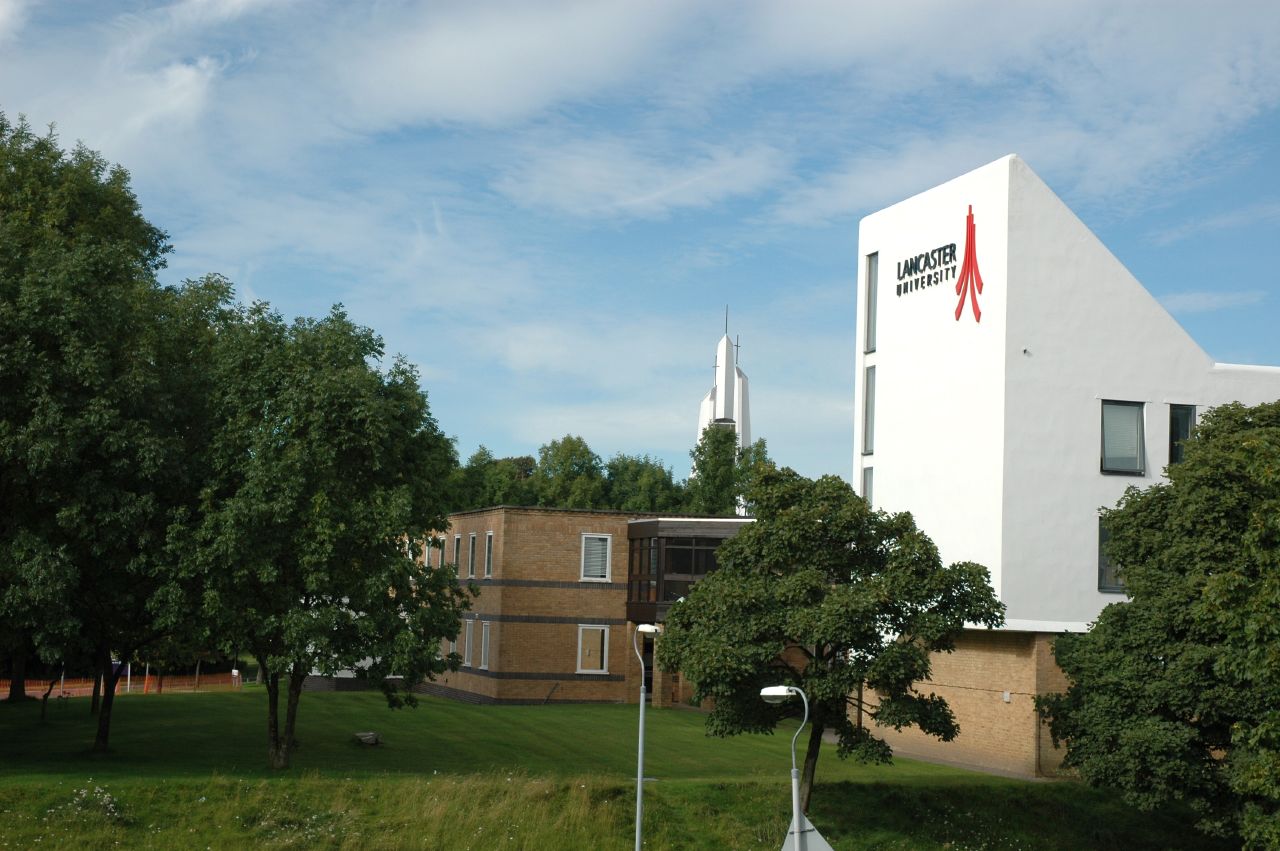
The chaplaincy building at Lancaster has 2 chapels. A Roman Catholic Chapel and an Anglican & Free Church Chapel. Sunday worship in the RC Chapel is simple: Mass every week (apart from when it's an AFC-led united service). In the AFC Chapel it's a bit more complicated. There's a mix of communion services, services of the word, student led services and united services. This means that it can sometimes feel a bit like lucky dip! The united services are a breed apart (but one I enjoy); I'll discuss these in a minute.
For both chapels (apart from for united services) the Sunday morning service starts in the concourse area of the building (between the 2 chapels). 'Concourse' worship usually takes the form of an introduction, confession, a song and some notices with the Christian community all together. We then share the peace before moving into our distinct chapels.
For united worship, we all gather together in one or other chapel for the whole service. The united service is always communion - RC, CofE or Methodist - with arrangements in place for those who are not in communion with the celebrant's church to receive communion. It isn't neat, but then our various interdenominational differences make neatness a bit difficult when it comes to communion.
During the vacations, the default position is a united service, which actually feels really good after a busy term. We can all meet together to praise God, even if the practical arrangements for communion are clumsy. We all hear the same sermon and sing the same hymns, and we feel like a single worshipping community.
I love the united services, especially out of term-time. Maybe that's why I didn't note the last term-time service we attended. But there you go; another last for Lancaster - our last term-time AFC service.
During the vacations, the default position is a united service, which actually feels really good after a busy term. We can all meet together to praise God, even if the practical arrangements for communion are clumsy. We all hear the same sermon and sing the same hymns, and we feel like a single worshipping community.
I love the united services, especially out of term-time. Maybe that's why I didn't note the last term-time service we attended. But there you go; another last for Lancaster - our last term-time AFC service.
10 June 2010
The day Stephen Hawking helped my prayer life
As I've blogged already this week, I'm participating in a week of accompanied prayer. As such, my attention has been slanted (to a greater extent than usual) towards my prayer life.
Yesterday, I followed a link from a blog, and I eventually arrived at an article about an interview given to ABC in the USA about Professor Stephen Hawking's latest TV series over the pond. I have a lot of time for Hawking. His work in explaining the more complex ideas in theoretical physics to a lay audience has been inspirational.
The paragraph in the article that caught my attention was one that resonated with something that has come up in the sessions with my prayer guide. From one of Hawking's answers about religion:
"What could define God [is thinking of God] as the embodiment of the laws of nature. However, this is not what most people would think of that God," Hawking told Sawyer. "They made a human-like being with whom one can have a personal relationship. When you look at the vast size of the universe and how insignificant an accidental human life is in it, that seems most impossible."I have a tendency to intellectualise God and faith (probably a personality-type issue). This can be very necessary, but it can sometimes reduce God to something like Hawking's caricature in the paragraph above; 'the embodiment of the laws of nature' and nothing more. I think when I intellectualise and theorise God, it becomes tempting to think of God only as a way of describing and understanding the physical reality of the world, and not as the personal God that Hawking criticises as a human-made artefact. This tendency reminds me of the 'category mistake' referred to by Rowan Williams in reference to creationism. We try to fit God into an inappropriate and inadequate system of understanding - scientific 'proof' - and we end up with an incomplete conception of the thing we were trying to understand.
I expect that one of the reasons I have this tendency is my degree in philosophy and my subsequent interest in the ongoing tussle between Dawkins and the religious world. I think I often confine my contemplation of God to philosophical thoughts about his existence, and the interaction of religious ideas with scientific ones, and I stop short of trying to know God better.
So Stephen Hawking has inadvertently encouraged me to address this matter in my private prayer time. I've resolved to try further to understand God in the personal sense that Hawking rejects.
97 days (meant to do this each day - will try harder)
2 July 2009
Unconvinced!
I watched the documentary on FIVE last night about the Turin (or Da Vinci) Shroud. It was a very strange experience, mostly in a televisual sense. Somehow, the one hour programme contained only 20-40 minutes of footage, and there was a strange editing fault which resulted in large parts of the programme being repeated several times over!
In terms of content, most of it was the same as I had already seen or read elsewhere, though it seemed to be dumbed-down for the FIVE audience. The new content related to the hypothesis that the image on the shroud was created using a camera obscura and photo-sensitive silver substances on a sheet of fabric. I found this to be quite persuasive and I would have liked to have seen more of the demonstration experiment they set up. Instead, they seemed to concentrate on trying to link the whole thing to Leonardo Da Vinci. I found these arguments to be much less than convincing.
Ultimately, it makes no difference to me. I'm convinced that the shround is not the genuine burial shroud of Christ already. I was just interested to see how the image had been formed, as it's claimed that the evidence is not consistent with a painted image or print.
The big news in this story, though, is that this may well be the oldest surviving photographic image! Now that's interesting.
In terms of content, most of it was the same as I had already seen or read elsewhere, though it seemed to be dumbed-down for the FIVE audience. The new content related to the hypothesis that the image on the shroud was created using a camera obscura and photo-sensitive silver substances on a sheet of fabric. I found this to be quite persuasive and I would have liked to have seen more of the demonstration experiment they set up. Instead, they seemed to concentrate on trying to link the whole thing to Leonardo Da Vinci. I found these arguments to be much less than convincing.
Ultimately, it makes no difference to me. I'm convinced that the shround is not the genuine burial shroud of Christ already. I was just interested to see how the image had been formed, as it's claimed that the evidence is not consistent with a painted image or print.
The big news in this story, though, is that this may well be the oldest surviving photographic image! Now that's interesting.
1 July 2009
New Turin Shroud conspiracy theory

I spotted this on the Amateur Photographer blog. There's a documentary on FIVE this evening which claims the image on the Turin Shroud was created by an early photographic process involving silver sulphate. The programme claims that none other than Leonardo Da Vinci made the image using a sculpture of his own face.
I'll have to watch it to check out the validity of their arguments, but the notion of the image as a photographic one fits with some of the other evidence I've seen. For example, the fact that the image is best seen in negative form, as in this picture. We don't really see many naturally formed negative images which haven't been 'created' by a human.
Anyway, I'm looking forward to the progamme - I'm a bit of a sucker for Dan Brown style conspiracy!
18 May 2009
Angry atheists
Thanks to Phil Cooke for leading me to this article from the LA Times by Charlotte Allen. I like this bit:
I can't stand atheists -- but it's not because they don't believe in God. It's because they're crashing bores.And this bit:
Other people, most recently the British cultural critic Terry Eagleton in his new book, "Faith, Reason, and Revolution," take to task such superstar nonbelievers as Oxford biologist Richard Dawkins ("The God Delusion") and political journalist Christopher Hitchens ("God Is Not Great") for indulging in a philosophically primitive opposition of faith and reason that assumes that if science can't prove something, it doesn't exist.
Maybe atheists wouldn't be so unpopular if they stopped beating the drum until the hide splits on their second-favorite topic: How stupid people are who believe in God. This is a favorite Dawkins theme. In a recent interview with Trina Hoaks, the atheist blogger for the Examiner.com website, Dawkins described religious believers as follows: "They feel uneducated, which they are; often rather stupid, which they are; inferior, which they are; and paranoid about pointy-headed intellectuals from the East Coast looking down on them, which, with some justification, they do." Thanks, Richard!I think she summarises some good points, and I actually like her combative style; it somehow seems fitting in the face of the vitriol of the atheist 'lobby'. I think she's right about the anger. People like Dawkins seem to be incredibly angry at a God in whom they don't believe. The other good point she makes is that the philosophical arguments often deployed by angry atheists are simplistic and naive. I'll have to see if I can find her book.
8 April 2009
Sometimes the National Secular Society just makes me mad!
Nowhere in the NSS's claims about the costs of hospital chaplaincy to the NHS do they point out the cost of NHS chaplaincy to the church! They seem to think that it's just NHS chaplains who visit sick people with spiritual needs. In my experience, the humble parish priest (along with ministers and leaders from other faith groups and countless lay people) do a massive amount of visiting without sending a bill to the UK taxpayer.
Also, the NSS seem to assume that Christians circle like vultures above the hospital wards, waiting to pick of the weak ones! Again, in my experience, the majority of contact concerning religious and spiritual matters is requested by the patient.
The NSS seems to believe biological health is the only thing that should be addressed in hospital but I am delighted that the NHS recognises the importance of spiritual health alongside biological health.

Also, the NSS seem to assume that Christians circle like vultures above the hospital wards, waiting to pick of the weak ones! Again, in my experience, the majority of contact concerning religious and spiritual matters is requested by the patient.
The NSS seems to believe biological health is the only thing that should be addressed in hospital but I am delighted that the NHS recognises the importance of spiritual health alongside biological health.
16 January 2009
Bus spotting

I saw my first atheist bus today - I didn't think we'd get them in lowly Lancaster. I also saw this on the Church Times blog.
7 January 2009
New Year's Resolutions
I don't usually go in for New Year's Resolutions, but I've made an exception this year. I've decided that I will aim to read from a book for an hour per day. I got a small pile of books for Christmas, and I'm determined to read them all!
My current book is Marcus Trescothick's autobiography, which is very good so far (I'll post a review when I've finished it), and I've managed to do more than my hour each day.
My other resolution is to try to say at least one of the offices every day; I've had less success with this one, but I'll perservere.
My current book is Marcus Trescothick's autobiography, which is very good so far (I'll post a review when I've finished it), and I've managed to do more than my hour each day.
My other resolution is to try to say at least one of the offices every day; I've had less success with this one, but I'll perservere.
15 November 2008
How not to evangelise
Thanks to Dave Keen (and seemingly various others) for this post about how not to evangelise. I've been reading lots of things about mission lately as I approach my BAP in just over a week, and a lot of the observations in the original post echo the sentiments of what I've been reading. How can we expect anyone to take us seriously if we don't do the same for them?
5 November 2008
Gods-on favourite
I enjoyed this story from Ruth Gledhill. The assertion that there probably isn't a God left an obvious area for a little fun. Well done Paddy Power.
24 October 2008
Yet more on Dawkins
Have a look here for some alternative suggestions for Dawkins and his fellow campaigners.
21 October 2008
Richard Dawkins
We had a great discussion about 'Dawkinsism' at our regular meeting for postgraduate students, staff and general misfits at the University Chaplaincy last night. We were led by an emeritus professor of Biology, who provided an interesting critical angle on some the notable omissions from Dawkins' books. He highlighted the fact that whilst Dawkins paints himself as an advocate of modern science, he only advocates a narrow part of the scientific landscape. Further to this, it seems to be the case that most biologists wouldn't name Dawkins as one of the notable academics in the field of evolutionary biology. So if he's not a leading figure in the world of biological research, and he doesn't even see theology as a legitimate academic discipline, where does his authority come from? For which academic community is he speaking? Anyway, there was much more in last night's discussion - I can't represent it all here.
I was amused to see that Dawkins was featured on the Church Times blog today, and I love the ironies that run through the story.
Subscribe to:
Posts (Atom)