Apart from my very brief update of last week, the blog has been silent for the last couple of weeks. I've just caught up with all my blog reading, which I'd also neglected, and it seems a lot has happened in the world since my silence started.
Though it's only been a couple of weeks, our world has changed in a massive way since my posts from before we left Lancashire. I think this will be the first of a brief series of posts about the changes we've experienced, and the transition we've gone through in recent days and weeks.
In our summer pack of information from Westcott was a letter from the Principal. In it, he told us that we needed to start letting go of the communities that were sending us so that we could fully embrace the community which was waiting to welcome us. At the time, I remember thinking that that was a nice idea, but that we had a house to pack, a busy time at work, and a one-year-old to care for. Letting go was something we just couldn't do at the start of the summer.
As the move date got closer, it was still difficult to let go. I was working until the Friday before our move, and you can't really let go when you're still doing the 9 to 5.
The first point at which it became real that we had to 'let go' was when we commenced our programme of farewell parties and services at Lancaster. The morning service on our final Sunday was hard. It was hard to acknowledge that we needed to let go of Lancaster and the Chaplaincy, even though we knew we had to do it. It was hard to say goodbye to friends, knowing that we had made the active decision to move away. It was really hard! And it was hard to let go of the comfort of knowing Lancaster and the University.
I found myself remembering the words of Hedley Cousin (a former Methodist Chaplain at the University) to a departing cohort of undergraduates. He said that they should treasure the experience of being part of the Chaplaincy because it was unique, and they were unlikely to find anything else quite like it. Having finally left after 13 years, I am sure that he was right. We'll treasure our memories of the Chaplaincy Community, from our days as idealistic undergrads to our more relaxed days with the Postgrad Group. We'll miss the friends we've made more than anything, though many have booked our spare room already, and those friendships will continue despite the distance.
So we've finally let go of Lancaster. Going back to visit will be nice, and we'll do it often, but it won't be the same. There will be no 'home' for us there, apart from the homes of our friends with whom we hope to stay. It still feels odd, and as DrLanky put it the other day, there's still a dull ache within us at the thought of what we've left behind. But underpinning all of these feelings is the belief and hope in God's purpose for our lives. In a very real sense, we did not choose the path that has led us here. Rather, we were chosen. In giving our lives to this vocation, we've accepted that there will be pain and discomfort along the way, and we need to learn to deal with it in a positive way.
Next time I'll fill you in with some of the details about our removal experience - I bet you can't wait.
Showing posts with label chaplaincy. Show all posts
Showing posts with label chaplaincy. Show all posts
5 October 2010


7 September 2010
A busy weekend
Last weekend was completely insane! We had five house guests, a meal with friends from the chaplaincy on Saturday, a farewell service at the Chaplaincy and a bring and share barbecue on the Sunday, finished off with Reflect. I meant to post about it yesterday, but I spent most of Monday trying to stay awake!
It's been a while since we had a weekend with lots of friends from the past visiting us, and it was great to do it again. It was notable, though, that life has changed in a massive way for some of us. The addition of small children puts a different emphasis on life, and bedtimes are a little more sensible than they used to be on similar weekends.
Another highlight of the weekend was our farewell service, which was the regular Chaplaincy (non-term-time) service with a liberal scattering of old faces who came back to wave us off. Since LittleLanky arrived, I've had a bit less to do with music in the morning services at Chaplaincy, and it was really good to team up with an old chaplaincy friend to plan and lead the music (with the accompaniment of RevKev on the guitar).
At this point I need to issue a **Blog Etiquette Warning**. I'm not usually one for posting the lyrics of songs and hymns on the blog, but I will do so shortly. Please turn away from the screen if you are offended by such things.
In worship, I find I am readily 'affected' by good music, and although Sunday wasn't necessarily a virtuoso performance, the final hymn was an emotional roller-coaster for me. We sang 'The Summons' by John Bell and Graham Maule from the Iona community. It's a hymn that I've always liked, despite the mauling (pardon the pun) it often gets by English organists and choirs, but on Sunday the words spoke to me in a spine tingling way that made it hard to sing - let alone lead. If you don't know it, or need a reminder, here are the words:
The other high point of the weekend was the barbecue after the service. We were joined by friends and family, and the weather was great! We had a wonderful time in each other's company, and I'm very grateful to all the people who pitched in to help with setting up and cleaning away. It always seems to be the same selfless individuals who disappear into the kitchen, without a sound, to do the washing up. You know who you are, and so do we! We notice your service to others, and we appreciate it.
Seeing so many friends from past and present made me reflect on the fact that although we are moving from Lancaster, the friends we have will support us wherever we go. We've offered the use of our spare room in Cambridge to many people now, and we really hope that at least some of them take up the offer. Our house in Lancaster has been a happy house with a sometimes revolving door, and although it can be hard work to keep on top of sheet washing and furniture re-arrangements, I'd like that to continue as we move to Cambridge. We need to start with a housewarming party, perhaps to coincide with LittleLanky's first birthday in October.
8 days!!!!!!!!!!!!!!!!!!!!!!!!!!!!
It's been a while since we had a weekend with lots of friends from the past visiting us, and it was great to do it again. It was notable, though, that life has changed in a massive way for some of us. The addition of small children puts a different emphasis on life, and bedtimes are a little more sensible than they used to be on similar weekends.
Another highlight of the weekend was our farewell service, which was the regular Chaplaincy (non-term-time) service with a liberal scattering of old faces who came back to wave us off. Since LittleLanky arrived, I've had a bit less to do with music in the morning services at Chaplaincy, and it was really good to team up with an old chaplaincy friend to plan and lead the music (with the accompaniment of RevKev on the guitar).
At this point I need to issue a **Blog Etiquette Warning**. I'm not usually one for posting the lyrics of songs and hymns on the blog, but I will do so shortly. Please turn away from the screen if you are offended by such things.
In worship, I find I am readily 'affected' by good music, and although Sunday wasn't necessarily a virtuoso performance, the final hymn was an emotional roller-coaster for me. We sang 'The Summons' by John Bell and Graham Maule from the Iona community. It's a hymn that I've always liked, despite the mauling (pardon the pun) it often gets by English organists and choirs, but on Sunday the words spoke to me in a spine tingling way that made it hard to sing - let alone lead. If you don't know it, or need a reminder, here are the words:
It was one of those situations when the writer speaks so clearly and poignantly that it feels as though the words could have been commissioned for that particular service, and for me personally. I certainly felt that God was speaking through the words of Bell and Maule, directly to my family and me as we prepare to take a massive step into the unknown. The words reminded me that although we don't know the details of how the next few years will pan out, we're being sent as God's people, under God's care, and that the journey will be one of growth and incredible change. It might be scary, but it's good-scary!
Will you come and follow me if I but call your name?
Will you go where you don't know and never be the same?
Will you let my love be shown? Will you let my name be known,
will you let my life be grown in you and you in me?
Will you leave yourself behind if I but call your name?
Will you care for cruel and kind and never be the same?
Will you risk the hostile stare should your life attract or scare?
Will you let me answer prayer in you and you in me?
Will you let the blinded see if I but call your name?
Will you set the prisoners free and never be the same?
Will you kiss the leper clean and do such as this unseen,
and admit to what I mean in you and you in me?
Will you love the "you" you hide if I but call your name?
Will you quell the fear inside and never be the same?
Will you use the faith you've found to reshape the world around,
through my sight and touch and sound in you and you in me?
Lord your summons echoes true when you but call my name.
Let me turn and follow you and never be the same.
In Your company I'll go where Your love and footsteps show.
Thus I'll move and live and grow in you and you in me.
The other high point of the weekend was the barbecue after the service. We were joined by friends and family, and the weather was great! We had a wonderful time in each other's company, and I'm very grateful to all the people who pitched in to help with setting up and cleaning away. It always seems to be the same selfless individuals who disappear into the kitchen, without a sound, to do the washing up. You know who you are, and so do we! We notice your service to others, and we appreciate it.
Seeing so many friends from past and present made me reflect on the fact that although we are moving from Lancaster, the friends we have will support us wherever we go. We've offered the use of our spare room in Cambridge to many people now, and we really hope that at least some of them take up the offer. Our house in Lancaster has been a happy house with a sometimes revolving door, and although it can be hard work to keep on top of sheet washing and furniture re-arrangements, I'd like that to continue as we move to Cambridge. We need to start with a housewarming party, perhaps to coincide with LittleLanky's first birthday in October.
8 days!!!!!!!!!!!!!!!!!!!!!!!!!!!!
1 September 2010
Two weeks and counting
The consequence of having been in Lancaster for a relatively long time is that there are many people to whom we need to say 'farewell'. This week sees the kick-off of a succession of visits, meals and gatherings to mark our departure, and we're looking forward to seeing all the people - even though we're sad about leaving Lancaster. I suppose it's made slightly easier because many of the people who are coming to say goodbye have already left Lancaster or were never in Lancaster - so our relationships with them will not be changing when we move. Being part of the Chaplaincy has meant that many of our best friends have long since moved on, having completed their studies. Of course, there are a few who have hung around like we have too, and it will be sad to say goodbye to the Postgrad Group and Reflect regulars.
The difficult thing is that this flurry of social activity is, by necessity, at the time when we are preparing to leave. This is also the time when we need to be packing our things into boxes, so we hope our house-guests won't mind assisting us in this task when they arrive later today.
We also need to reduce the amount of food and drink that we have to transport in two weeks time, so they might have to help us with a small oversupply of beer and other beverages which have been taking up space in our spare room since a party in February.
14 days
31 August 2010
Tuesday roundup
As yesterday was a Bank Holiday, my semi-frequent Monday roundup didn't happen. Here's a Tuesday roundup instead.
KP Skipped - I worked hard for a crisp related pun there, and I think I got away with it. It turns out that the out of form Kevin Pietersen has been dropped for the upcoming Twenty20 games against Pakistan. I applaud the guts of the England selectors in leaving him out, but I can't help feeling that his downfall was brought about by his disastrous spell as England captain. Since then, he just hasn't seemed like the player he used to be. I expect the selectors had something to do with his ill-judged promotion, so they probably need to take a share of the responsibility for his current state. Announcing the news on Twitter in conjunction with an expletive probably wasn't the best move though KP.
Lies and corruption - Having posted recently about the higher moral standards in cricket (compared to other sports), I am very disappointed to see the revelations about the Pakistan cricket team. It's not the first time the sport has been rocked by a betting scandal, and I would think that the explosion of online spot-betting has made life very difficult for the ICC's anti-corruption people. It's such a shame that the Pakistan team seem to have so many problems at the moment, and I hope they return to their position as a top test team soon.
Looking forward - Matthew McMurray has broken a 2 month blogging gap with a catch-up post, and his post makes me look forward to my own training. He recounts some of the events from his current placement, and I find myself itching to get stuck in!
Speaking in tongues - This week, the Chaplaincy has hosted an exchange trip. We are linked with chaplaincies at the Universities of Oulu (Finland) and Braunschweig (Germany). Each summer, a group of students visits one of the three countries, enabling them to experience church in another culture and life in another place. A few years ago we went to the Finnish leg of the exchange, and it was fantastic! This week we have a bunch of Finns and Germans with us, and on Sunday they joined us for worship. In the service there was one of those special moments. When we say the Lord's Prayer at Chaplaincy, we often encourage people to use their own language or version of the prayer, but usually you can hear a very dominant lead from the English-speakers. On Sunday, though, there was a definite feeling that we are an international church! The sound of the different languages together was one of those moments when it felt like we were doing it right for a change. All were welcome, and all languages were welcome. We shared together, and our collective experience was broadened. Tonight is the farewell party for the visitors, so we sheall drop in to say farewell.
15 days
27 August 2010
The final countdown
In exactly two weeks, I will be winding down for my last afternoon of work at the University. I've worked here for over three and a half years now, but our connections with the place go back to 1997 when I joined as an undergraduate student (DrLanky (though she wasn't a Dr or a Lanky at that time) came along in 1998). We've worshipped at the Chaplaincy Centre for the whole time, and we really feel like part of the University community.
As we get closer, it's dawning on me how strange it will be to move away from here. Lancaster is home in many ways, and it seems strange to be preparing to move to Cambridge for just two years.
Jante's tales of packing have made me realise that we really need to crack on with putting things in boxes this weekend. We keep having a go, but seem to stall after a seemingly pitiful effort. In a way it will be helpful if the bank holiday weekend is a washout - at least we wouldn't be tempted to venture out of the house much.
19 days
20 July 2010
Another 'last'

Following my earlier post, 'first of the lasts', I realised today that We have already been to our last term-time service at Chaplaincy. The character of the worship at Chaplaincy changes significantly during the vacation periods. Due to the smaller numbers and Chaplains' holidays, we adopt a pattern of weekly united services. I've talked about these before on the blog, but I'll recap the whole shooting match for any newcomers.
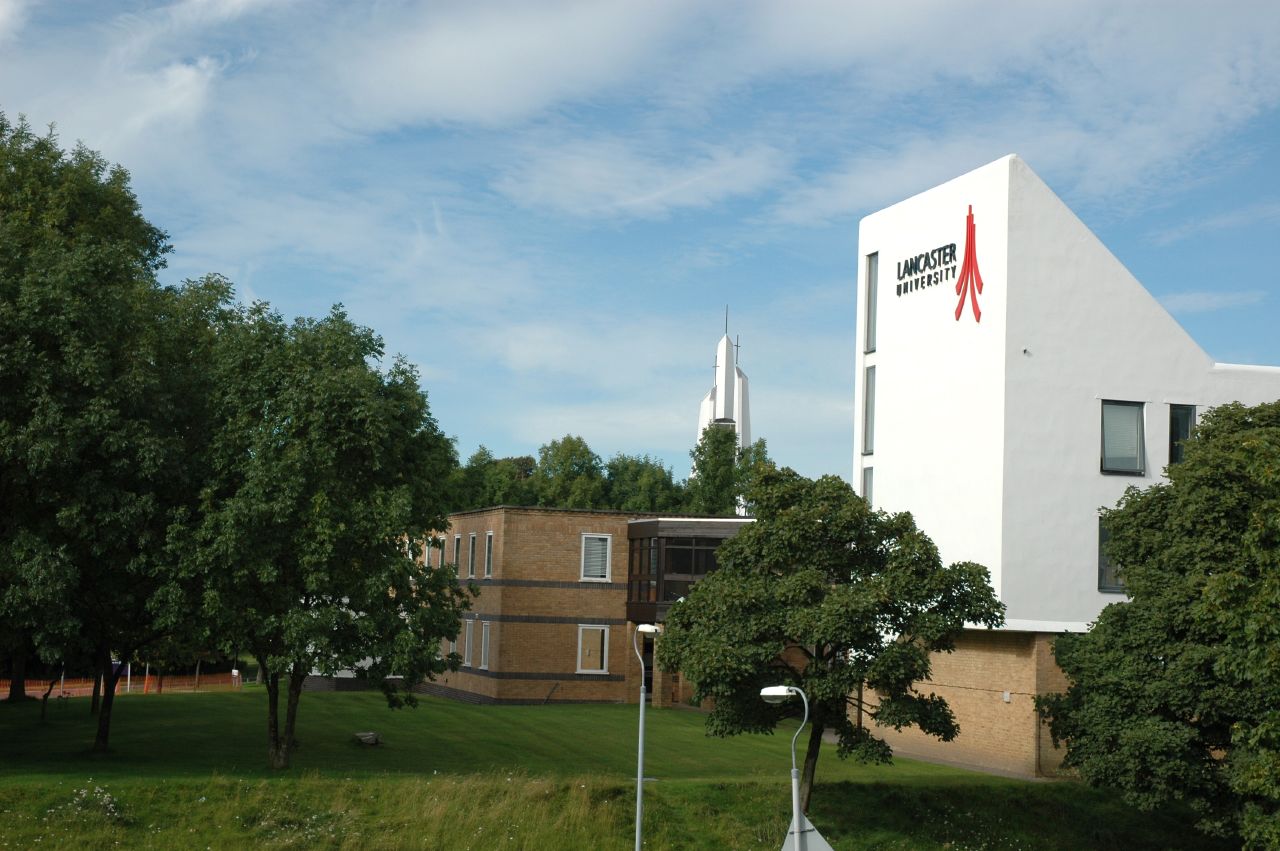
The chaplaincy building at Lancaster has 2 chapels. A Roman Catholic Chapel and an Anglican & Free Church Chapel. Sunday worship in the RC Chapel is simple: Mass every week (apart from when it's an AFC-led united service). In the AFC Chapel it's a bit more complicated. There's a mix of communion services, services of the word, student led services and united services. This means that it can sometimes feel a bit like lucky dip! The united services are a breed apart (but one I enjoy); I'll discuss these in a minute.
For both chapels (apart from for united services) the Sunday morning service starts in the concourse area of the building (between the 2 chapels). 'Concourse' worship usually takes the form of an introduction, confession, a song and some notices with the Christian community all together. We then share the peace before moving into our distinct chapels.
For united worship, we all gather together in one or other chapel for the whole service. The united service is always communion - RC, CofE or Methodist - with arrangements in place for those who are not in communion with the celebrant's church to receive communion. It isn't neat, but then our various interdenominational differences make neatness a bit difficult when it comes to communion.
During the vacations, the default position is a united service, which actually feels really good after a busy term. We can all meet together to praise God, even if the practical arrangements for communion are clumsy. We all hear the same sermon and sing the same hymns, and we feel like a single worshipping community.
I love the united services, especially out of term-time. Maybe that's why I didn't note the last term-time service we attended. But there you go; another last for Lancaster - our last term-time AFC service.
30 June 2010
Sermon for Corpus Christi
This is the text from a sermon for Corpus Christi at the Lancaster University Chaplaincy Centre, United Service, 2010. Sorry it's long!
Introduction
For an Anglican to be asked to preach at a Roman Catholic Mass on the Feast of Corpus Christi is something that can only happen somewhere like this! I’m honoured to have been asked, even though Father Hugh hadn’t realised what day it was when he asked me to preach.
As this is a united service, and as we all have a different experience of church, I thought it would be worth beginning with some explanation about the fairly Catholic feast day we celebrate today. Corpus Christi is a celebration of the importance and centrality of communion in the church. In some parts of the world, there are bright and boisterous processions of the blessed sacrament, and the day is a big deal! Here in the UK, it tends to be a more sober affair, if it is celebrated at all!
As a Philosophy graduate, I was tempted, for a very brief moment, to deal with some of the nitty gritty theology and philosophy of the eucharist, but common sense got the better of me, and I decided on a different tack.
Communion at Chaplaincy
By the time we leave Lancaster in September, it will be 13 years since I arrived at the university and discovered this rather odd expression of “church” on the campus. It’s very tempting to become acclimatised to Chaplaincy; to begin to think of it as normal. But it really isn’t!
One of the things that marks Lancaster’s Chaplaincy out against other ecumenical church communities is its approach to communion. In many ecumenical settings, communion is avoided at all costs, because it is felt to be a difficult area; a source of dispute and disagreement between the different traditions (and sometimes within individual denominations). At Lancaster, the ‘united service’ is a sign of hope for greater Christian unity, though I acknowledge that for some it is unsatisfactory and clumsy in theological terms. It gives an opportunity for each of us to see another way and a different approach, and it allows our views and opinions about communion to be challenged and refreshed. This has to be a good thing! For all of us. Even if it isn’t always a comfortable experience.
Meals and hospitality
I have a strong memory of A level English Literature classes. We were studying Charles Dickens’ Great Expectations, and we were asked to brainstorm on some of the key themes in the book. As we got further into the exercise, it became very clear that food was a very significant theme, and it got its own section of the whiteboard with an expanding spider diagram detailing the different references to food we could each recall.
I thought of this occasion when I began to think about writing this sermon. Like Great Expectations, food is a matter of great importance in the bible, and, more specifically, the act of eating together is something which is documented on many occasions, as we heard in our readings this morning. As well as the examples we’ve just heard, there are many famous occasions where Jesus takes time to eat with people: sinners, tax collectors, women with dubious reputations... the list goes on and on! According to one source on the internet, there are over 700 references to eating in the bible, and I can well believe it.
I could go on for some time recalling significant instances of meals in the bible, and my point here is that, just like Great Expectations, this isn’t a coincidence. The presentation of food and the sharing of meals is there for a reason.
Especially in the New Testament, the importance of sharing meals, and of hospitality, is that this is one of Jesus’ key ways of putting people at ease, and relating to them in a very natural way.
When we eat together, we tend not to do so in stony silence! We usually spend our time chatting, recalling common experiences and learning more about our dining companions. If you attend a dinner party with people you don’t know, you would usually hope to have made some new friends by the end of the evening. And so it is with Jesus. By inviting and enabling people to eat together, his primary concern is not with their dietary wellbeing! He’s not checking they’re getting their 5 a day or to see if they’re drinking too much wine! He wants his guests to spend time together, relating to each other and getting to know each other. And he wants to get to know them too! In all of these things, Jesus is setting a perfect example of building community and enacting communion.
In the communion service as we now know it, we are not invited to partake in an act of solitary dietary sustenance. Instead, we are invited to eat together and to share a meal with Jesus, where he enables us to get to know our neighbour and to spend some time building a community.
This is why communion at Chaplaincy has always been so important to me. It has given me a chance to become part of a community with a broader group of people than I could hope to meet in a ‘regular’ parish.
The cultural relevance of communion
Another observation which strikes me as significant here is a specific one about culture. In the Western Church, we get rather hung up on some of the specifics of communion. Whilst I understand and respect the reasons for tradition and customs in the church, perhaps we sometimes get a bit distracted from the most important issues. Let me explain further...
Rural Lancashire, despite the weather, has some striking similarities to the land Jesus occupied 2000 years ago:
We have a very large number of sheep and livestock dotted around our hillsides, and we have a cultural memory that extends back before the invention of quad bikes and tractors to shepherds and a more manual approach to agriculture.
Despite massive changes to the diet of the average Lancastrian, bread is still at the centre. Sandwiches for lunch, toast at breakfast, naan bread with your chicken tikka massala in the evening. Bread is still a staple of our diet as it was when Jesus ate and drank with friends and followers.
So why does any of that matter and what does it have to do with communion? Well it matters when it comes to working out the significance of the bible for us in 21st century Lancashire. The cultural references in the bible relate to a particular place and time, and by chance, they also relate to us today in a very direct way. We’re very fortunate in this respect.
Parables about shepherds and accounts of bread and wine speak directly to our cultural experience. This is great for us, but what about those places where sheep don’t live, where there’s no coastline and no fishermen, or where bread isn’t on the menu because rice is the staple food? How would we relate to the lessons and examples of the bible if we didn’t have some of the common items of culture that we take for granted?
It might seem trivial, but this issue cuts to the core of what we believe about communion.
‘the Lord Jesus took some bread, and thanked God for it and broke it, and he said, “this is my body, which is for you; do this as a memorial of me”’
What Jesus did was to take the everyday items of bread and wine (by the way, it probably wasn’t a vintage bottle of French red! It was more likely a rough and ready home-brew). He took these mundane, everyday items and he blessed them. In the same way he would have done at every meal time. He also said that when we do the same thing, we celebrate his memorial, and those basic elements become transformed somehow, to be for us, his body and his blood.
Jesus took an everyday act with everyday items, and began the sacrament we now know as communion, and which we celebrate today.
When Jesus set this phenomenon in motion, do you think he was hung-up on the specific ingredients of that meal as the template for communion for the next 2000 years? Most parts of the church take very seriously the aim to remain faithful to the particulars of the communion elements – bread and wine – and this goes down to very fine detail about what can and cannot be done! But what meaning, for the communicant, does this carry where bread and wine are not everyday items?
What I’m not saying here is that tradition and doctrine are not important. Of course they are, and I’m quite a traditionalist in many ways. I’m simply saying that we ought to take opportunities like this to explore what communion means in our place and time, and also in other places.
I’d like to teach you a song to which I was introduced a few months ago, and it says much of what I want to say in song. It talks of Jesus as the rice of life, and it comes from Malaysia, where rice is the staple food, and to think of Jesus as rice rather than bread is meaningful.
Teach song - The rice of life
Conclusion
In conclusion, I want to take us back to our gospel reading: ‘Jesus made the crowds welcome and talked to them about the Kingdom of God’. The example Jesus sets for us time and again in the New Testament is that a very real aspect of communion is to be found in people’s kitchens and round their dining tables, with meals, drinks and conversations. This doesn’t undermine the importance of Mass, or Communion, or the Lord’s Supper – however we know it – it simply challenges us to broaden or understanding about what Jesus was getting at when he broke bread and drank wine.
Maybe we need to readdress our approach to food and community on an everyday basis. Maybe we should consider saying grace before our meals if we don’t already. Maybe we should look at Jesus’ example a little more closely as we decide how best to perform our mission as a church.
It’s no coincidence that the fastest growing areas of the church in this country take food an hospitality to heart - I’m thinking of the Alpha model of meals and discussion.
We need to remember that Jesus used his ministry on earth to relate to people and to build communion and community. This is the example that should be at the heart of our lives as individuals and as the church.
21 June 2010
First of the lasts
This weekend saw the first of many things we will do for the last time in Lancaster over the coming weeks. At the end of the summer term, the 'Postgrad Group', to which the Lankies belong, are 'volunteered' for the job of providing a barbecue lunch after the Sunday morning service at the Chaplaincy Centre. On one notable and now legendary occasion, I recall the Lancaster weather providing some challenging conditions. Mr H and I were chief barbecue operatives, and we ended up sheltering under umbrellas whilst the rainwater rose around our ankles. We ended up barbecueing in about 6 inches of standing water, such was the ferocity of the rain storm.
Thankfully, the last Chaplaincy barbecue for which we are likely to be responsible was accomanied by glorious weather. The sun shone all day, as it is set to do for much of this week.
Lancaster is noted for it's challenging weather patterns, but our final year here has been great (so far). A proper winter with snow that stuck (the first in 13 years living in Lancaster), and a dry and warm summer which will hopefully continue a little longer!This weekend also saw our last term-time 'Reflect' service. The undergraduate students will all be departing next weekend, and by the time 7pm on Sunday comes around, they will all be gone. Reflect does continue through the vacation, but with more modest numbers. This means the music has to change slightly - we'll lose a couple of accomplished part-singers, so we'll go for more simple songs and chants. This changes the essential character of the services until the undergrads return in October.
After the service last night, I had a look back through the register of services. It seems we started Reflect in October 2006 - wow! It's amazing how time flies, and how services like this evolve. We've settled into a pattern of fairly traditional liturgies. We still have a mix of music from the Iona Community, Taize and a few good-old hymns, but we seem to have drifted into an amount of liturgical consistency which I had never envisaged at the beginning. Anyway, we're now on the home straight with Reflect. Fortunately, volunteers have come forward to take on the admin side of the service, so it will keep going after we've gone to Cambridge. This makes me very happy!
86 days to go
8 June 2010
Making time
I'm participating in a 'week of accompanied prayer' this week at the Chaplaincy Centre. So far so good, in that I have been allocated a very good guide for the week who has already been challenging and probing. The week aims to provide a retreat in daily life, so I'm still at work and still at home, but each day I meet with my guide for 1/2 an hour. Alongside this there are workshop sessions to which all the participants are invited. The crucial thing, though, is that you commit to at least half an hour of personal prayer time in the day.
The thing that I've been surprised about already is that I do have the time to fit prayer into my daily routine. My anxiety at the beginning of the programme was that I wouldn't be able to commit enough time to do it justice.I've decided that now is the time to kick start my routine again (it has lapsed since the arrival of LittleLanky), and for the first time in ages I said morning prayer today. To save me juggling prayer books and bibles, I used my iPhone to bring up the appropriate order on the C of E website. How long until someone develops a Daily Prayer app??? It can't be that difficult!
Anyway, my main point is that I do seem to have enough time to slot in prayer to a very busy day. I just need to remind myself of this each day, and fight the urge to collapse in front of the TV.
Subscribe to:
Posts (Atom)